
The pains that gave birth to innovation
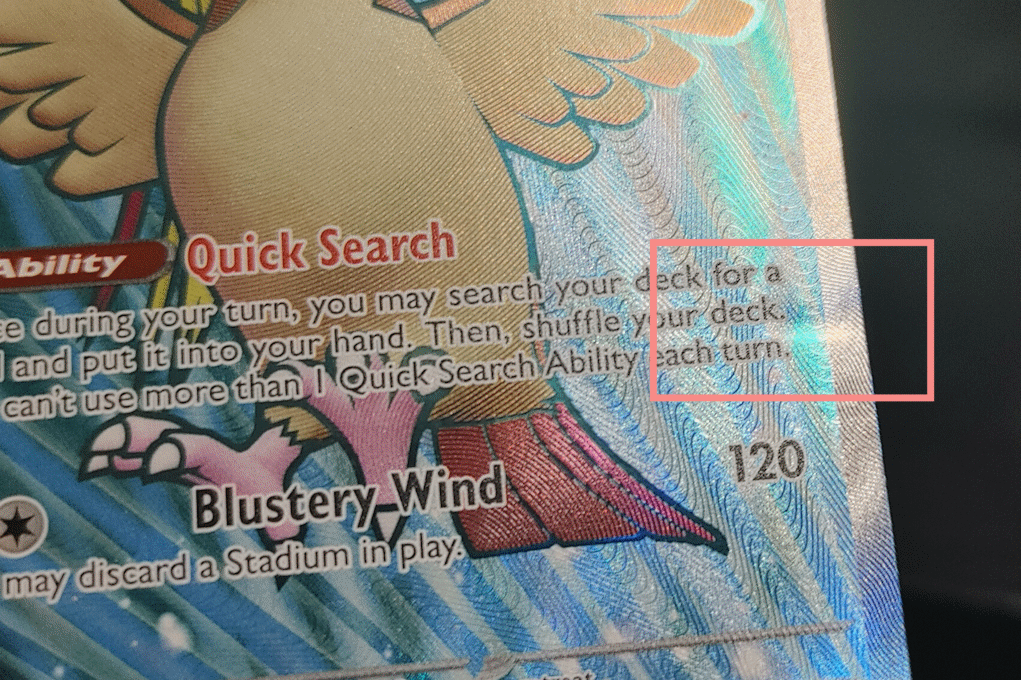
This is where it all started for me.
First, let's back up a few decades.
Collecting as a child: a tale shared by many
I was really into playing sports as a kid. When I was about eight years old, I started playing baseball; that's also when I started collecting baseball cards. I never had anything considered "valuable", but I had my basic 3-ring binder that I loved to look through and reorganize by set, by team, or by whatever I was feeling that month.
A couple years later, I discovered the Pokémon TV show and eventually the trading card game. Along with so many other kids my age, I got really into collecting and playing. I had a Pokémon binder with my full Pokédex from the Base, Jungle, and Fossil sets. When the later sets came out and there were multiple cards for each creature, I had to figure out new ways to organize them while still keeping each creature in numeric order.
The next school year, I went back with my collection expecting to play and trade again, but one other kid I didn't even know made fun of me for still liking Pokémon, and that was it for me: I was done. The day soon came when I sold all of my Pokémon cards and later my baseball cards.
Collecting as an adult: fun again
Jumping forward to 2023, I was married and had kids of my own. I had played Pokémon Go with them and reminisced in the fun I had with the games and the tv show as a kid. One day, they came home with Pokémon cards from McDonalds. Our oldest son was struggling with math, and I remembered that the Pokémon card game had basic addition, subtraction, and multiplication as part of the mechanics.
I went out and bought a (looking back, seriously-overpriced) box of bulk cards from someone locally, and that was it for me: I was back in. I started regrowing my now all-holographic Pokédex from modern cards and kept them in a large D-ring binder.
I was looking through my cards one day, and I found my Pidgeot ex card with that dent from the ring; it hurt a little bit, not because it had lost a lot of monetary value, but because I had opened it from my first booster box I had bought for myself, and I loved the colors and art. I didn’t want that to happen again.
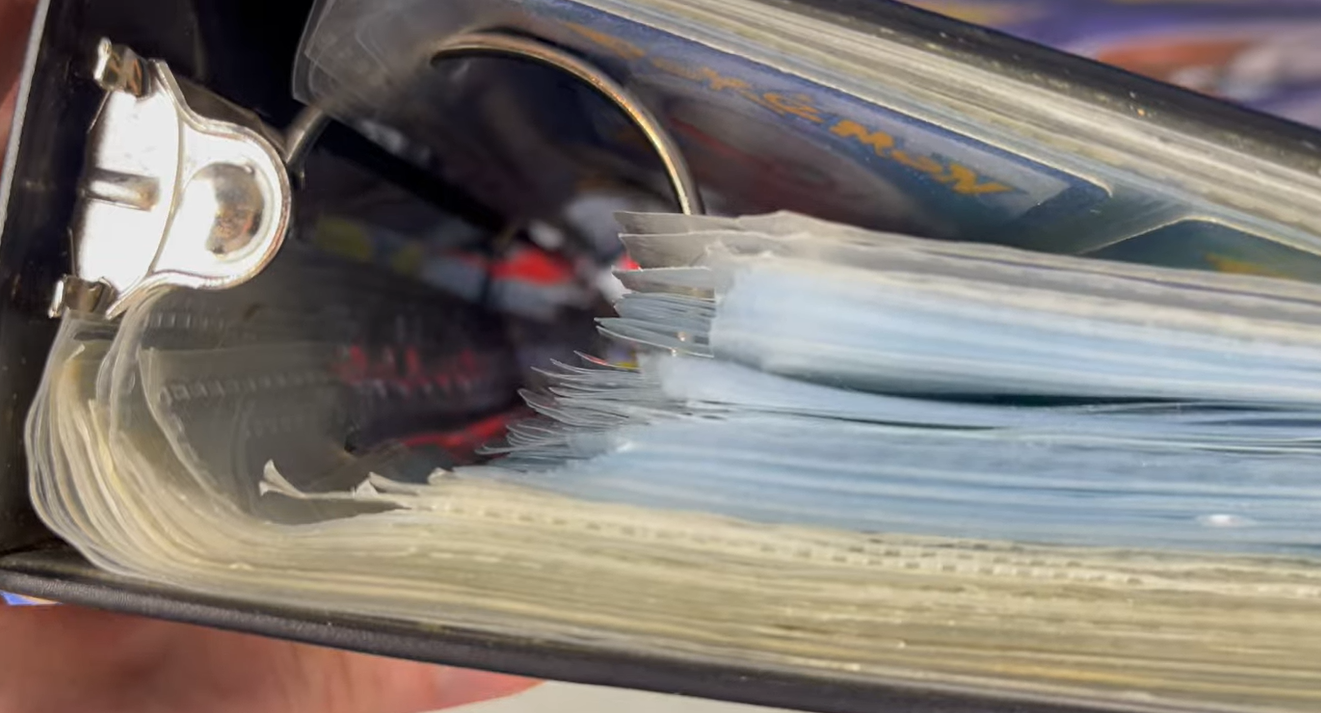
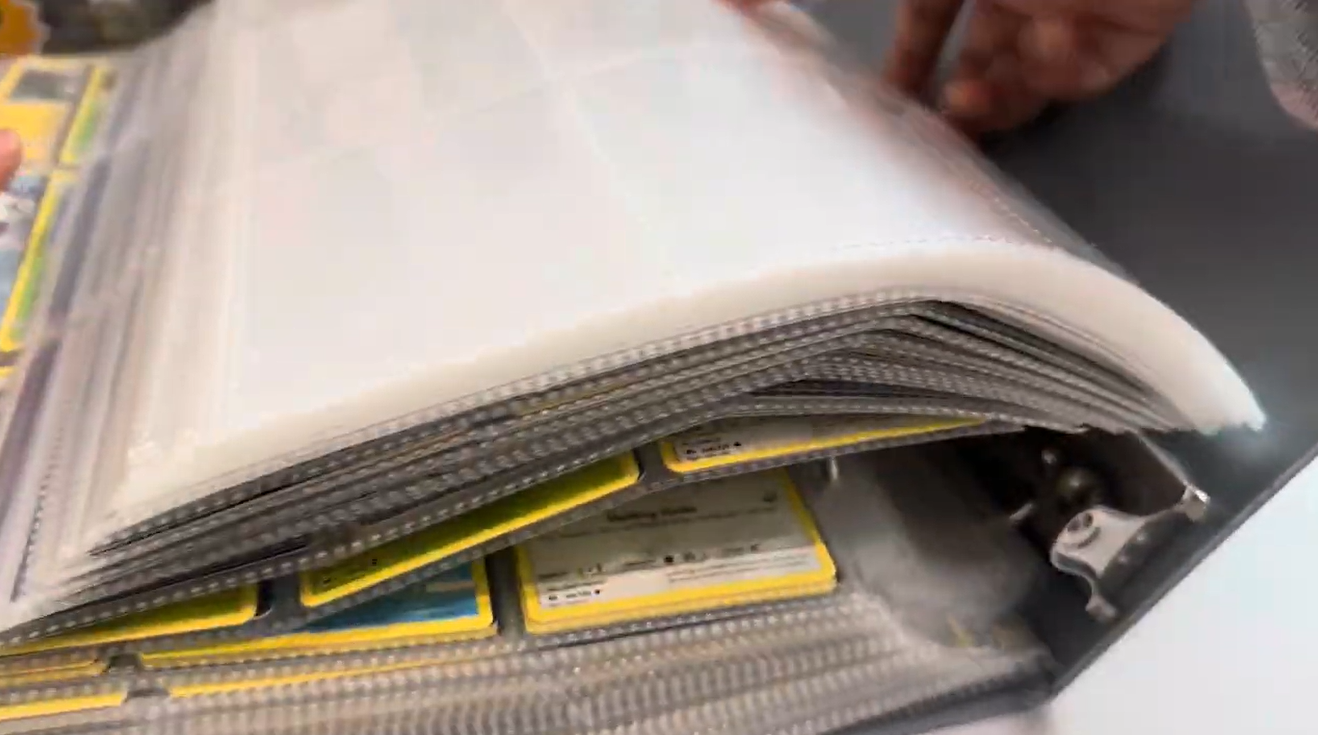
It turns out this experience is not at all uncommon. A short search online will yield a bunch of other collectors demonstrating the problem (see the screen captures below). Since this was a universal collector problem, I assumed there had to be something out there to prevent this.
Searching for a solution
My collection moved to smaller D-ring binders, and I was extra cautious when turning the pages. Still, I couldn't control how other people were going to handle my collection. I had to keep a close eye when letting kids look through my cards, and even some more serious collectors were surprisingly haphazard with page-turning. It was an imperfect solution, and it took the fun out of sharing my collection.
I started looking for something better. Obviously, there was the portfolio-style binder, but I still consider myself a creative collector; I knew I was going to want to add, remove, and rearrange cards. I assumed there had to be a trading card storage book with rearrangeable pages and no risk of damaging my cards.
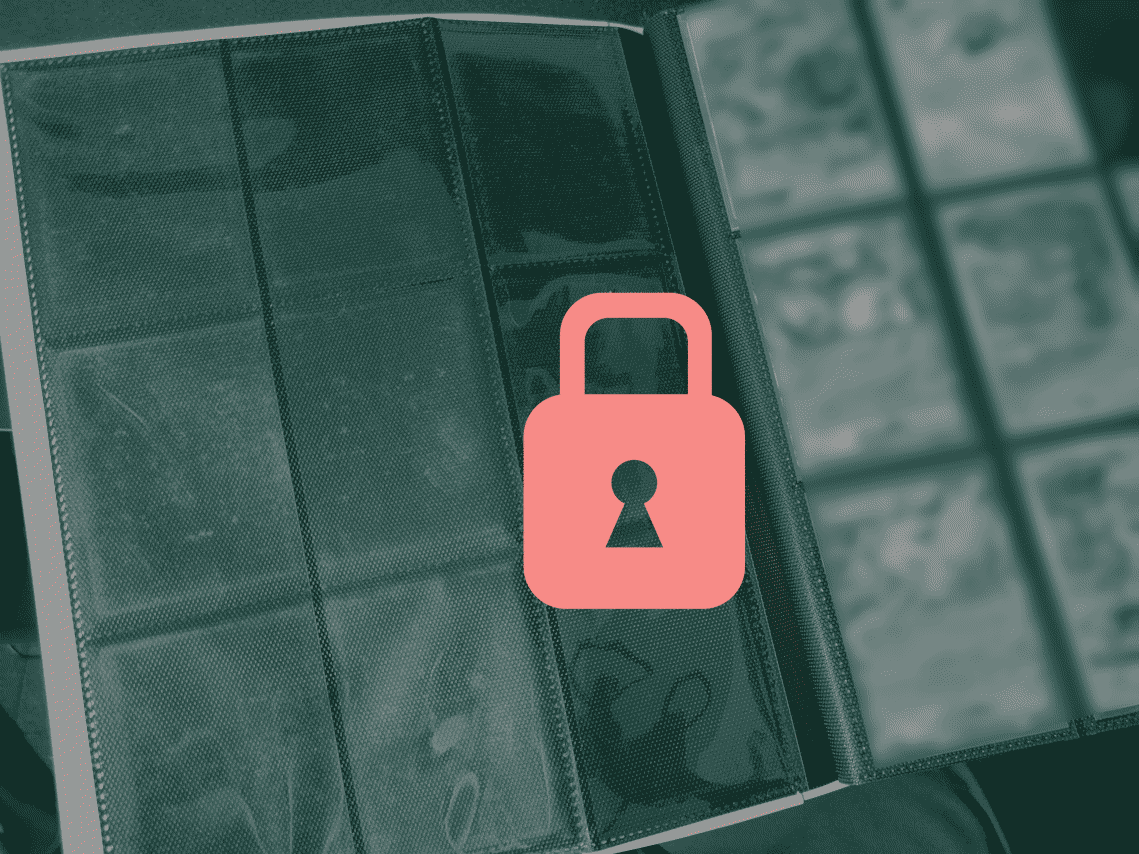
Trading card portfolios lock your pages in place
After a couple of months of searching and asking Reddit and Facebook communities, I came up empty-handed. I realized if I wanted my ideal binder, I was going to have to make it myself.
Sound familiar?
This started as a personal project, but I know I’m not the only one faced with this undesirable compromise. If you are one of the many in this position, I believe I have come up with the optimal solution for you and for me. To bring it to life, I need to hit factory minimums. That’s where you come in.
I’m launching a Kickstarter campaign soon to make this binder a reality for collectors everywhere.
